Hardscape
Interlock Pavers vs. Poured Concrete: Which Wins?
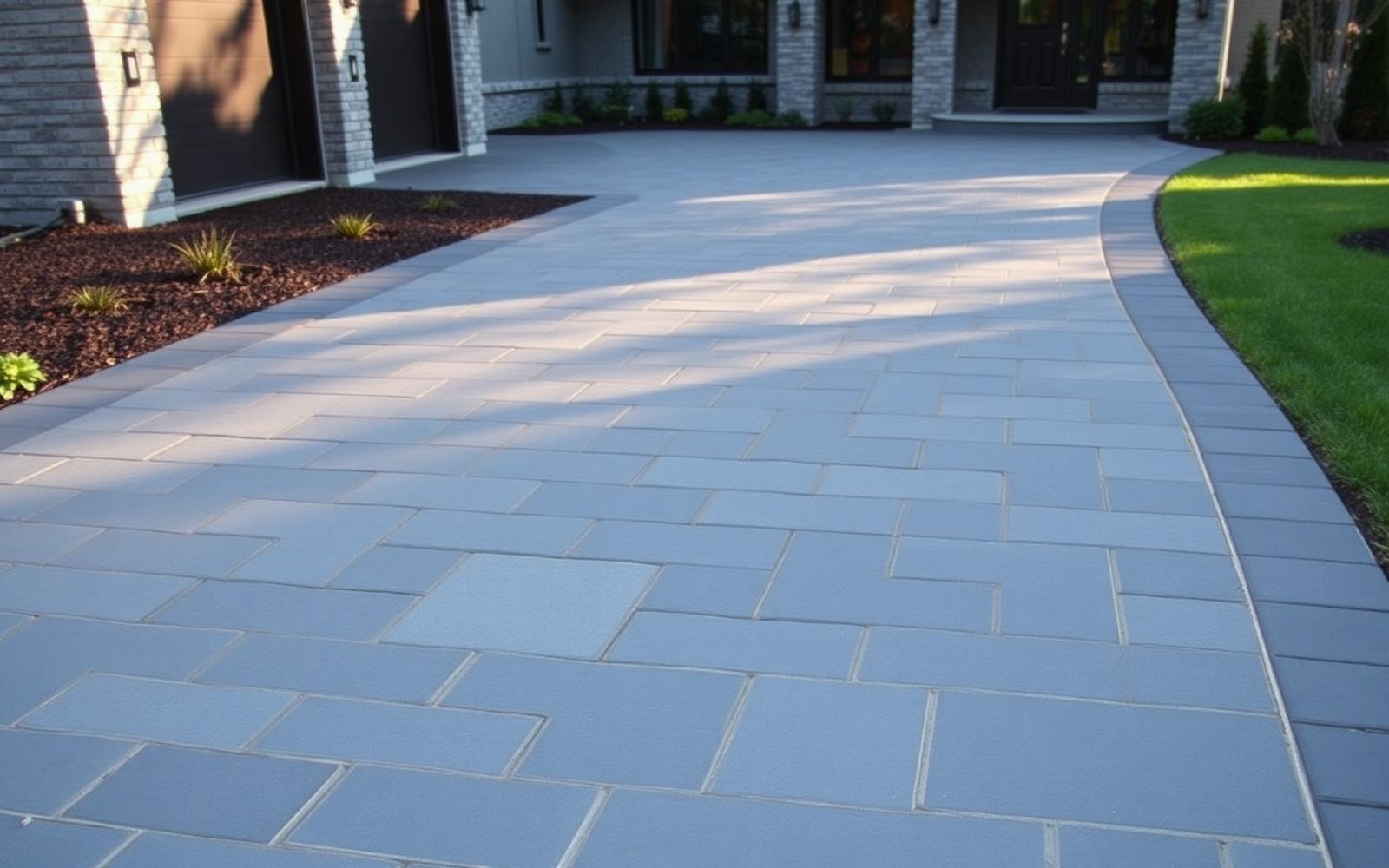
Every driveway and patio quote we send eventually gets the same question: should I just pour concrete instead? It's a fair question. Concrete is faster to install and usually cheaper on day one. But in southern Ontario, day one isn't what matters.
How each handles freeze-thaw
Poured concrete is a single rigid slab. When the ground heaves in February, the slab has nowhere to go — so it cracks. Once water gets into the crack, the next freeze widens it. Most residential concrete pads we see start showing cracks within 5-7 years.
Interlock is the opposite. It's hundreds of individual stones bedded on a flexible base of compacted aggregate and bedding sand. The whole system moves slightly with the frost, then settles back. No cracks to chase.
Repairs
When concrete fails, you patch it (visible) or replace the slab (expensive). When an interlock stone gets oil-stained or chipped, we pull the individual stone, swap it, re-sand the joints, and you'd never know.
Cost over 20 years
- Concrete: lower install, ~$3-6k repair/replacement around year 10
- Interlock: ~25-40% higher install, minimal repair cost
- Resale: interlock consistently appraises higher in our market
When concrete still makes sense
Garage pads, utility walkways behind the house, and shed bases where you don't care about the look — concrete is fine. For anything that's visible from the street or where you'll be entertaining, interlock wins on both looks and lifespan.
Thinking about a project like this?
Free, no-pressure consultation across Cambridge, Kitchener, Waterloo, Brantford and Guelph.
Get a free quote